 Business License

A Complete Guide to Using Dimmable Power Supplies: Tips, Tricks, and Troubleshooting
In the modern lighting landscape, brightness control is no longer a luxury—it’s a necessity. Whether you’re designing a cozy home ambiance, optimizing a commercial space for productivity, or enhancing a smart lighting system, dimmable power supplies are the unsung heroes that make it all possible. But using them effectively isn’t just about twisting a dimmer knob; it requires understanding how they work, choosing the right type, and avoiding common pitfalls. This guide breaks down everything you need to know to use dimmable power supplies like a pro, from installation basics to troubleshooting common issues.
What Is a Dimmable Power Supply, and Why Does It Matter?
A dimmable power supply—also known as a dimmable LED driver—is an electronic device that adjusts its output voltage or current based on a dimming signal, allowing you to control the brightness of LED lights seamlessly. Unlike standard constant-voltage or constant-current power supplies, dimmable models feature sophisticated circuitry (including signal sampling, phase control, and filtering) that ensures stable, flicker-free performance at any brightness level.
The importance of a quality dimmable power supply can’t be overstated: it not only lets you customize lighting ambiance but also extends the lifespan of your LED fixtures, reduces energy consumption, and ensures compatibility with various dimmer systems—from traditional wall dimmers to smart home controllers. Without the right dimmable power supply, even the best LED lights can suffer from flickering, uneven dimming, or premature failure.
Choosing the Right Dimming Method for Your Needs
Not all dimmable power supplies work the same way—they rely on different dimming methods, each suited to specific applications. Understanding the differences will help you choose the right one for your project:
1. Triac (Leading-Edge Phase-Cut) Dimming
Triac dimming is the most common and cost-effective method, ideal for retrofitting existing lighting systems with traditional wall rotary dimmers (e.g., Lutron, Leviton). It works by cutting the leading edge of the AC waveform to adjust output voltage, offering broad compatibility with legacy incandescent dimmers. However, it may cause minor flickering with low-wattage LEDs, making it better suited for residential spaces than high-precision commercial applications.
2. ELV (Trailing-Edge) Dimming
ELV dimming cuts the trailing edge of the AC waveform instead, delivering smoother dimming, lower noise, and less flicker compared to triac dimming. It’s perfect for premium residential spaces, hotels, and retail environments where lighting quality is a priority. ELV dimmers are also more compatible with low-voltage LED fixtures, making them a popular choice for modern lighting designs.
3. 0–10V / 1–10V Dimming
This low-voltage signal dimming method offers high precision and linear brightness control, making it ideal for large-scale commercial spaces, stage lighting, exhibition halls, and offices. It uses a separate control wire to send a 0–10V (or 1–10V) signal, allowing for seamless integration with building automation systems and precise brightness adjustments across multiple fixtures.
4. PWM (Pulse-Width Modulation) Dimming
PWM dimming controls brightness by rapidly switching LEDs on and off (too fast for the human eye to detect), with the “on-time” percentage (duty cycle) determining perceived brightness. It offers precise control with no color shift, making it ideal for studios, medical facilities, and smart home systems. For best results, choose a PWM dimmable power supply with a frequency of at least 20kHz to avoid visible flicker and step-like transitions.
Step-by-Step Guide to Using Dimmable Power Supplies
Using a dimmable power supply correctly involves three key steps: installation, compatibility checks, and optimal operation. Follow these guidelines to ensure safety and performance:
1. Pre-Installation: Check Compatibility
Compatibility is the single most important factor—mismatched components will lead to poor performance or damage. Before installation:
Match the power supply’s output type (constant voltage or constant current) to your LED fixtures: LED strips typically use constant voltage, while spotlights and downlights use constant current.
Ensure the power supply’s voltage, current, and power ratings align with your fixtures. Most power supplies perform best when loaded at 60–80% of their total capacity (or 25–80% for some models).
Verify that the dimmable power supply is compatible with your dimmer switch (e.g., triac, ELV, 0–10V). Avoid combining multiple power supplies on the same dimmer switch unless it’s a 0–10V dimming circuit.
2. Safe Installation
Always follow electrical codes (e.g., NEC) and consult a licensed electrician if you’re not experienced with wiring. Key installation tips:
Disconnect power at the fuse or circuit breaker before starting any electrical work.
Install the power supply in an accessible location (not sealed in a wall) for future servicing. If it has exposed wire connections, use a metal junction box.
Avoid wet or damp locations unless the power supply is rated for weatherproof use. For exterior damp areas, install it in a weatherproof enclosure to protect against moisture.
Use the correct wire size based on voltage drop, amperage, and environment—consult NEC guidelines for details.
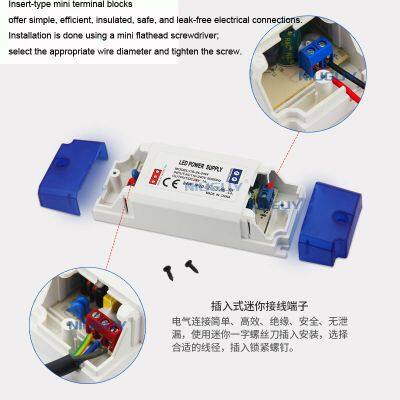
Wire correctly: Match positive (+) and negative (-) terminals (incorrect polarity can damage the power supply or fixtures).
3. Optimal Operation
Once installed, follow these tips to maximize performance and lifespan:
Avoid overloading the power supply—never exceed its maximum wattage rating.
For PWM dimming, keep the frequency above 20kHz to prevent flicker and eye strain.
Label dimmable outlets (e.g., with a label maker) and orient them upside down to indicate they’re connected to a dimmer—this makes the system more user-friendly.
Don’t mix load types (e.g., LED strips and recessed lights) on the same circuit—each should have a dedicated power supply.
Troubleshooting Common Dimmable Power Supply Issues
Even with proper installation, you may encounter issues. Here are the most common problems and how to fix them:
1. Flickering Lights
Causes: Mismatched dimming method, low PWM frequency, poor power supply design, or unstable grid voltage.
Solution: Use a flicker-free dimmable power supply, ensure PWM frequency is ≥20kHz, check compatibility between the power supply and dimmer, and verify grid voltage stability.
2. Uneven or Step-Like Dimming
Causes: Parameter mismatch between the power supply and fixtures, incorrect dimming method, or low PWM resolution.
Solution: Confirm the power supply’s ratings match your fixtures, upgrade to a high-quality dimmable power supply (e.g., DALI-2 models for precise control), and optimize PWM settings.
3. Buzzing or Humming Noises
Causes: Unstable grid voltage, poor circuit design, or incompatible dimmer and power supply combinations.
Solution: Use a high-quality power supply with optimized circuitry, choose a wide-voltage input model (100V–277V) for unstable grids, and ensure compatibility between the dimmer and power supply.
4. Dimming Failure (No Response)
Causes: Incorrect wiring (e.g., reversed polarity), incompatible dimmer protocol, or overloaded power supply.
Solution: Check wiring connections, verify protocol compatibility (e.g., 0–10V vs. triac), and reduce the load to stay within the power supply’s capacity.
Final Tips for Long-Lasting Performance
To get the most out of your dimmable power supply:
Choose high-quality, reputable brands—cheap power supplies often lack proper protection (overcurrent, overvoltage, overheating) and fail prematurely.
Keep the power supply cool—avoid placing it in enclosed spaces without ventilation, as overheating reduces lifespan.
Regularly inspect wiring and connections for damage or loose contacts, which can cause arcing or poor performance.
Follow the manufacturer’s warranty guidelines—modifying or disassembling the power supply will void most warranties.
Conclusion
Dimmable power supplies are the key to unlocking the full potential of modern LED lighting, offering flexibility, energy efficiency, and ambiance control. By understanding the different dimming methods, ensuring compatibility, following safe installation practices, and troubleshooting common issues, you can create a lighting system that’s both functional and beautiful. Whether you’re a homeowner, electrician, or lighting designer, this guide will help you use dimmable power supplies with confidence—turning ordinary lighting into an extraordinary experience.
Have questions about a specific dimming setup? Leave a comment below, and we’ll help you find the perfect solution!
Recently Posted
-
A Complete Guide to Dimmable LED Drivers: 12V, 24V & TRIAC Dimmable Solutions
April 28, 2026LED lighting has become the mainstream choice for modern residential, commercial and industrial lighting projects, thanks to its h Read More
 -
Everything You Need to Know About Cabinet LED Drivers
April 17, 2026Cabinet LED drivers are the unsung heroes behind every functional and beautiful cabinet lighting setup. As the core component that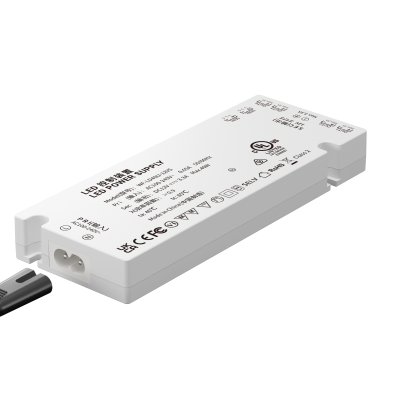 Read More
 -
How to Choose the Right LED Driver for LED Strip Lights
April 10, 2026Choosing the right LED driver is very important for your LED strip lights. A suitable LED power supply can make your lighting syst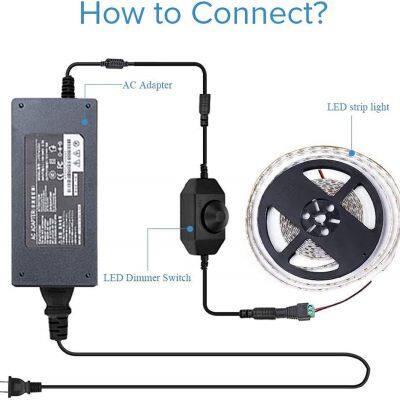 Read More
 -
How to Choose the Right LED Driver for LED Strip Lights?
April 8, 2026Choosing the right LED driver is very important for your LED strip lights. A suitable UL/cUL listed LED power supply can make your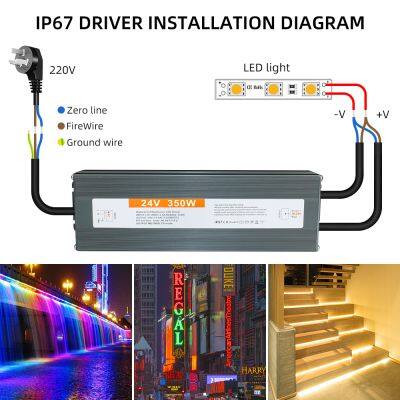 Read More

Contact Us
Recommended Products
-
 LED Emergency Exit Sign With Battery Backup, 90, 120, 180 Minute Emergency OperationNegotiableMOQ: 1 Piece
 -
CE ROHS Listed 100 Watt 12 Volt dc Power Supply Led Transformer 100wNegotiableMOQ: 1 Piece
-
CE ROHS Listed 12 Volt 60 Watt Led Driver Factory Directly Price for Led StripNegotiableMOQ: 1 Piece
-
CE ROHS Listed Waterproof Led Driver Ip67 24vdc 12vdc 10w for Led MirrorNegotiableMOQ: 1 Piece
-
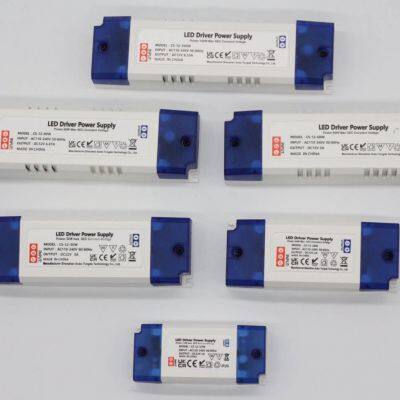
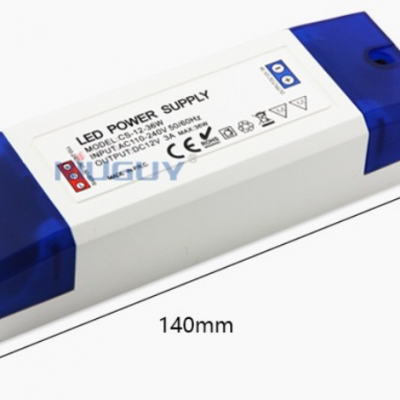
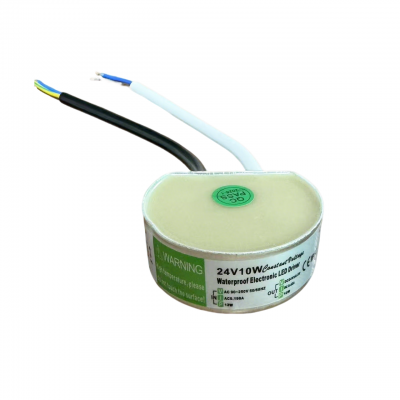
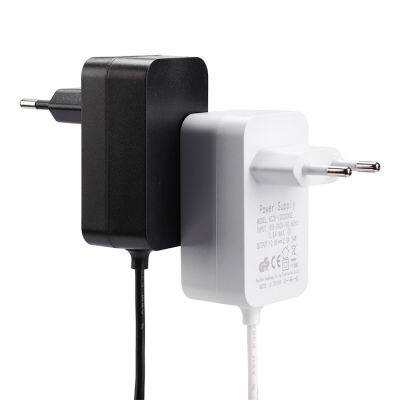
100-240vac 50 60hz 12vdc 1a 2a 3a 5a 6a Switching Power Supply AdapterNegotiableMOQ: 5 Pieces
-
Mini Size Led Driver 10w 12w IP20 Slim LED Driver Switching Led Power SupplyNegotiableMOQ: 5 Pieces
-
CE ROHS Listed 12w to 100w Plastic Case IP20 Slim LED Driver Switching Led Power SupplyNegotiableMOQ: 5 Pieces
-
UL ETL Listed LED DRIVER TRIAC DIMMABLE LED POWER SUPPLY LED TRANSFORMER 100W 200W 300WNegotiableMOQ: 5 Pieces
-
144W Max Load Dimmer Switch Knob Led DC12-24V Single Color Lighting Strip Cob SMD Rotary ControllerUS$ 0.8MOQ: 50 Pieces
-
New Design Colors Silicone Material Ip67 Waterproof Outdoor 10w Smd2835 6mm Width Led Flex Neon LightNegotiableMOQ: 50 Rolls